15 July 2026
Dry Needling vs Acupuncture: What Is the Difference?
Dry needling and acupuncture both use thin needles, but they have different approaches and purposes. Learn about the differences and what to consider when choosing a treatment.

15 July 2026
Dry needling and acupuncture both use thin needles, but they have different approaches and purposes. Learn about the differences and what to consider when choosing a treatment.
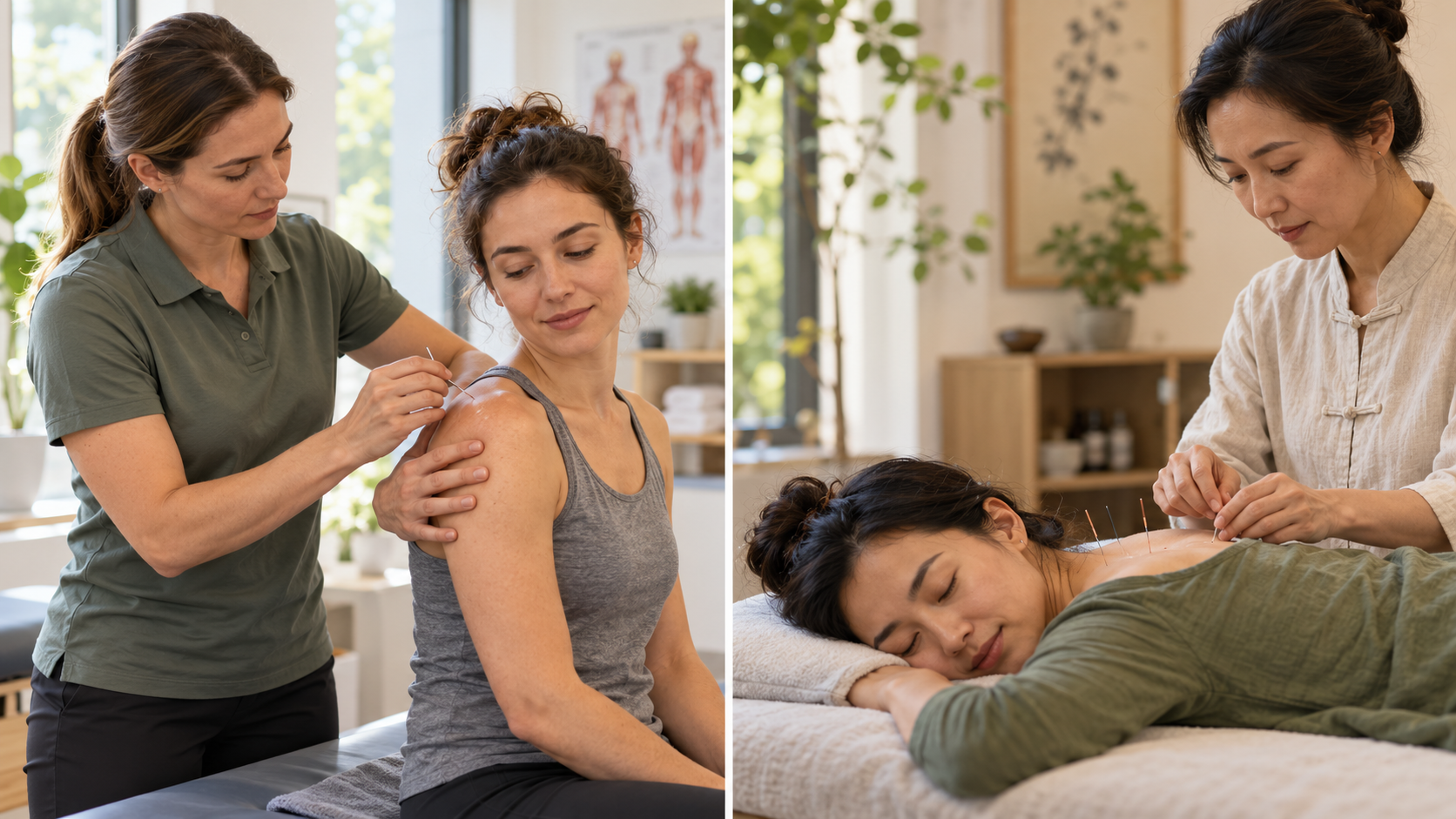
Although acupuncture and dry needling use similar thin needles, they are different therapies with distinct purposes and techniques. Acupuncture is rooted in traditional Chinese medicine and involves inserting needles at specific points on the body. Dry needling is commonly used in physiotherapy and focuses on muscles and trigger points as part of care for certain musculoskeletal conditions.
In this article, Beyond Health Physio, a leading physiotherapy clinic in SE Calgary, explains some key differences between dry needling and acupuncture.
Acupuncture is a traditional therapeutic practice that originated in China. It involves inserting thin needles into specific points on the body as part of a treatment approach.
Traditional Chinese medicine includes concepts such as Qi and meridians. Acupuncture has also been studied in modern healthcare for different types of pain and other conditions. Evidence of its effectiveness varies depending on the condition.
Dry needling is a therapeutic technique commonly used by physiotherapists to help manage some muscle-related symptoms. It involves inserting thin, sterile needles into targeted muscles or trigger points. A practitioner may include it in a personalized physiotherapy plan based on a person’s symptoms and needs.
Dry needling is generally used in a musculoskeletal treatment context. Its approach differs from acupuncture, which is rooted in traditional Chinese medicine.
Learn about dry needling in SE Calgary, Alberta
The main differences involve the treatment approach and how practitioners select points. Dry needling primarily targets muscles and trigger points as part of musculoskeletal care. Acupuncture follows the principles of traditional Chinese medicine and uses specific points as part of its broader treatment approach.
Both techniques use thin needles, but their methods, practitioner training, and scope of practice can vary by location and professional qualifications. Ask your practitioner about their training, the proposed treatment, and any potential risks.
Get in touch with our physiotherapy team in SE Calgary
There is no single treatment that is right for every person or condition. If you are unsure whether dry needling or acupuncture may suit you, discuss your main concern with a qualified healthcare professional.
A qualified practitioner can assess your needs, explain potential benefits and risks, and help you consider suitable treatment options. When choosing a practitioner, check their qualifications, experience, and hygiene practices.
Dry needling and acupuncture use thin needles but have different origins and treatment approaches. The most suitable option depends on your needs and circumstances. A qualified healthcare professional can help you understand the available options and make an informed decision.
Also, check out:
Best chiropractor in SE Calgary, Alberta
Acupuncture in SE Calgary, Alberta